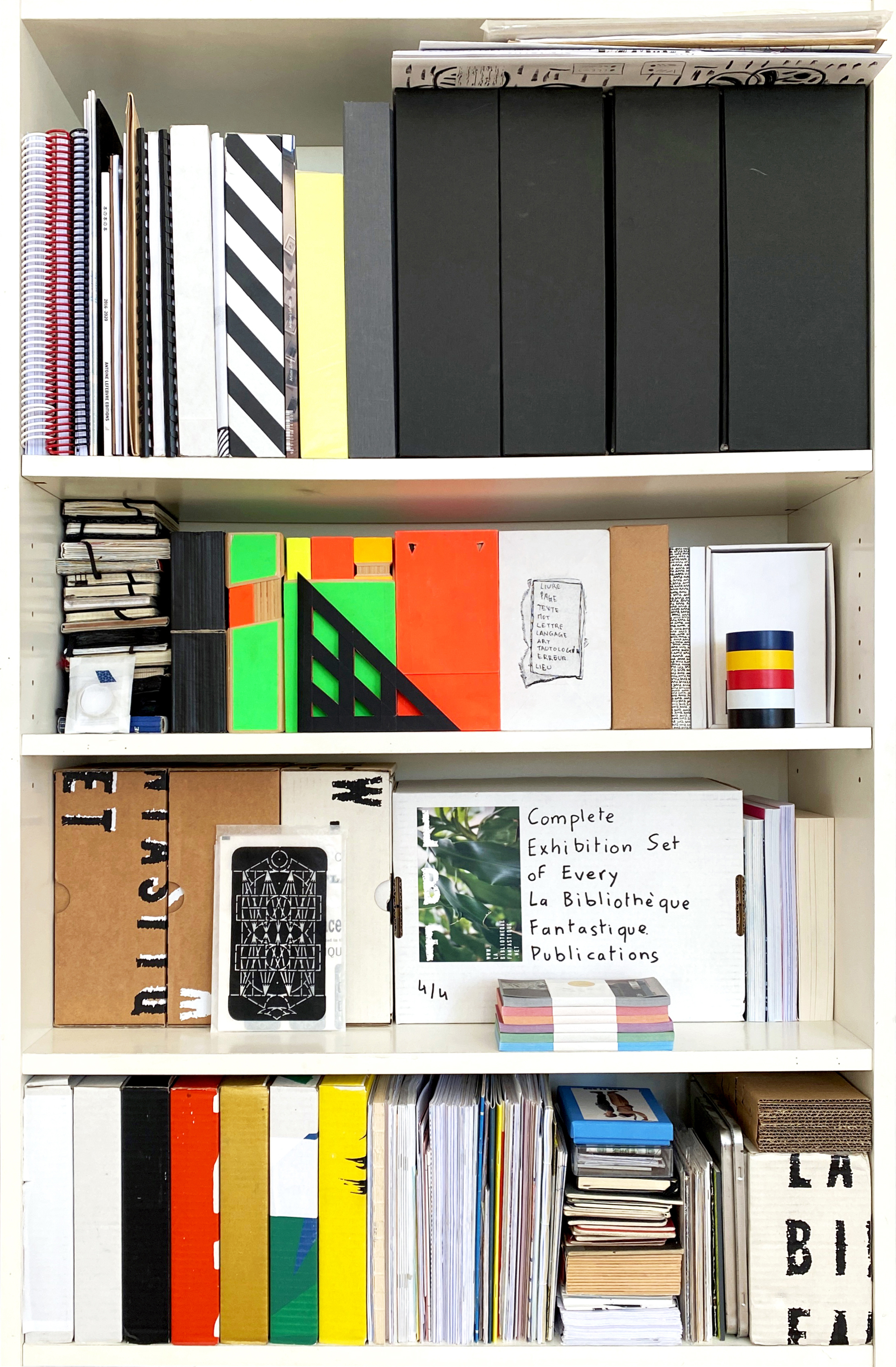


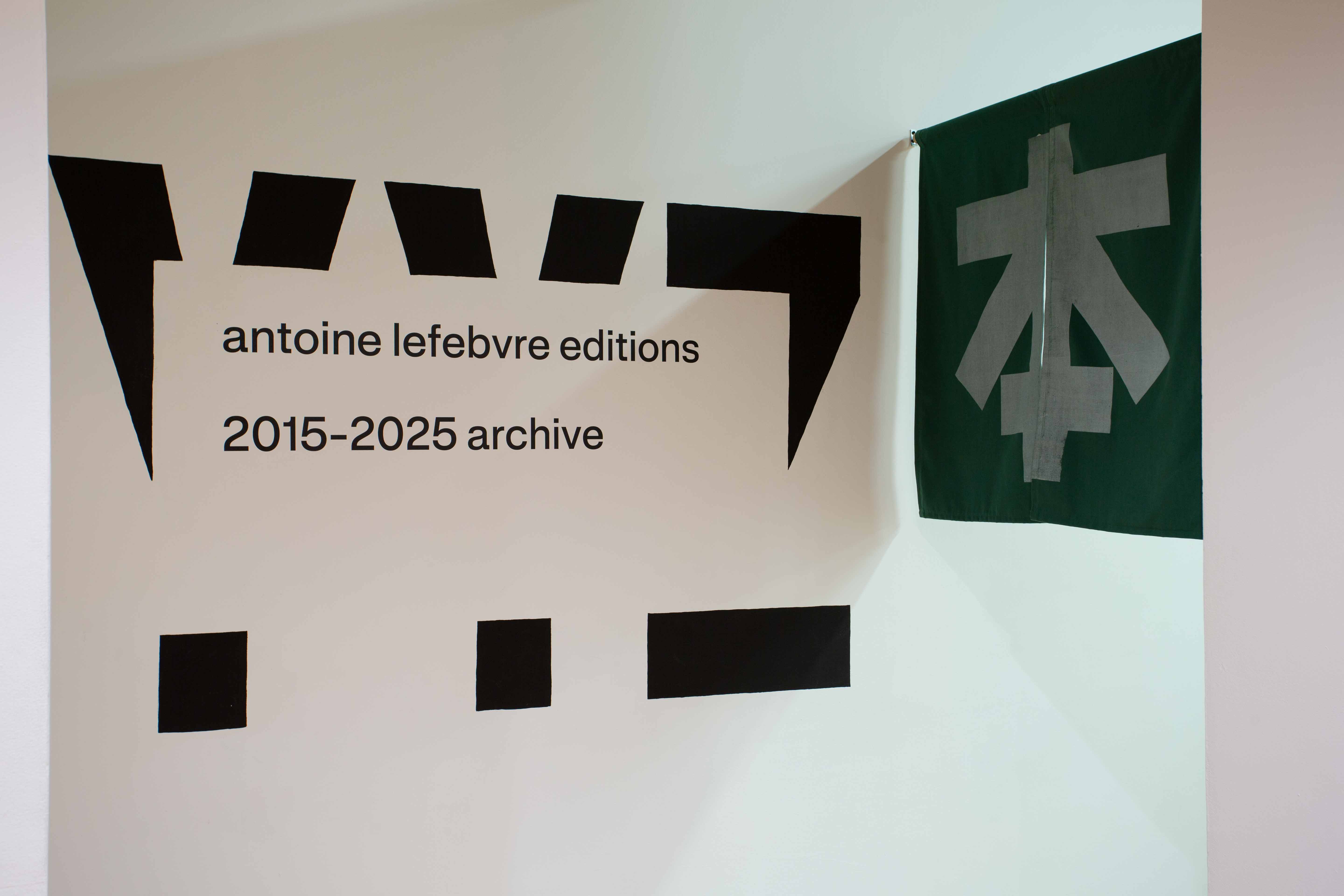
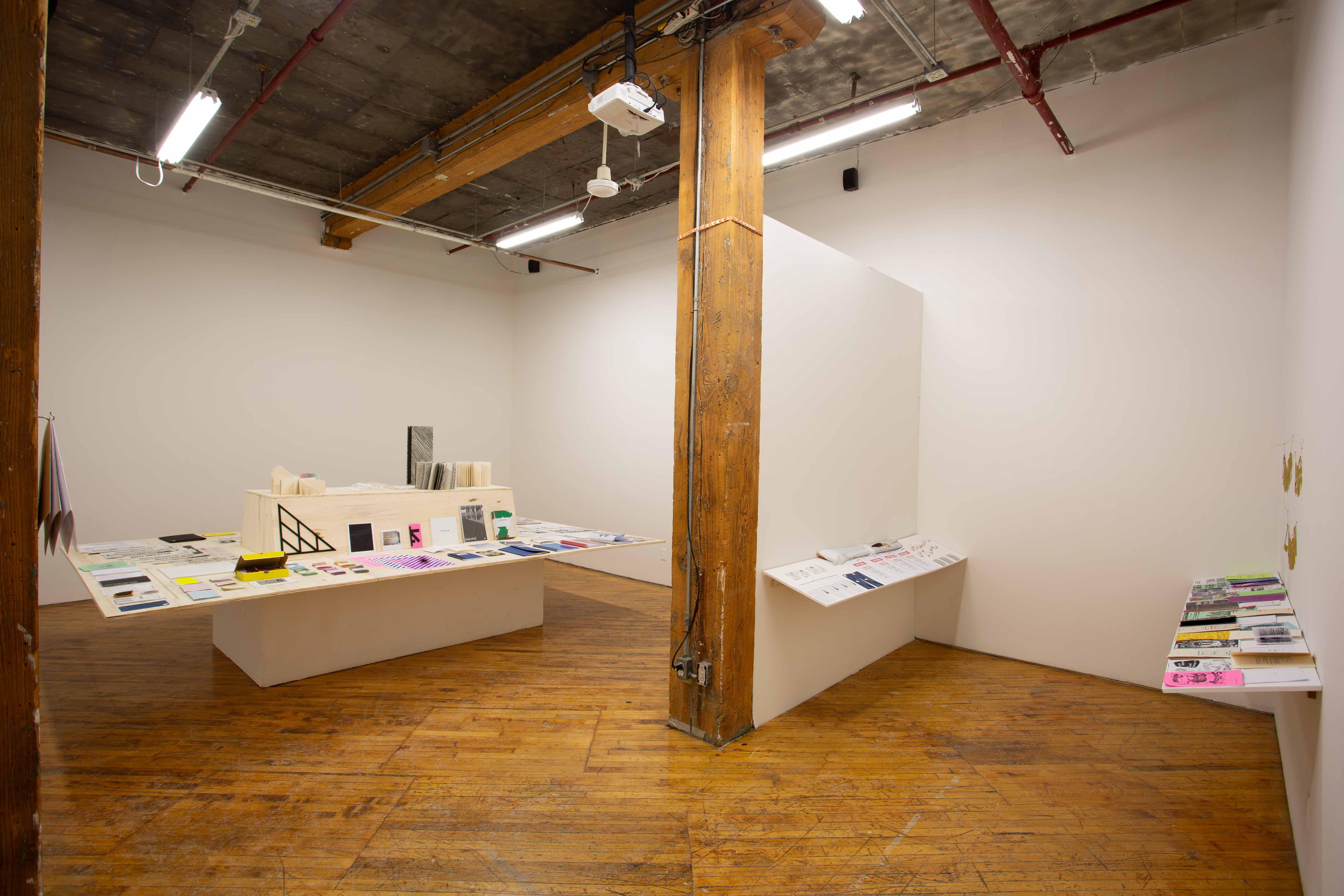
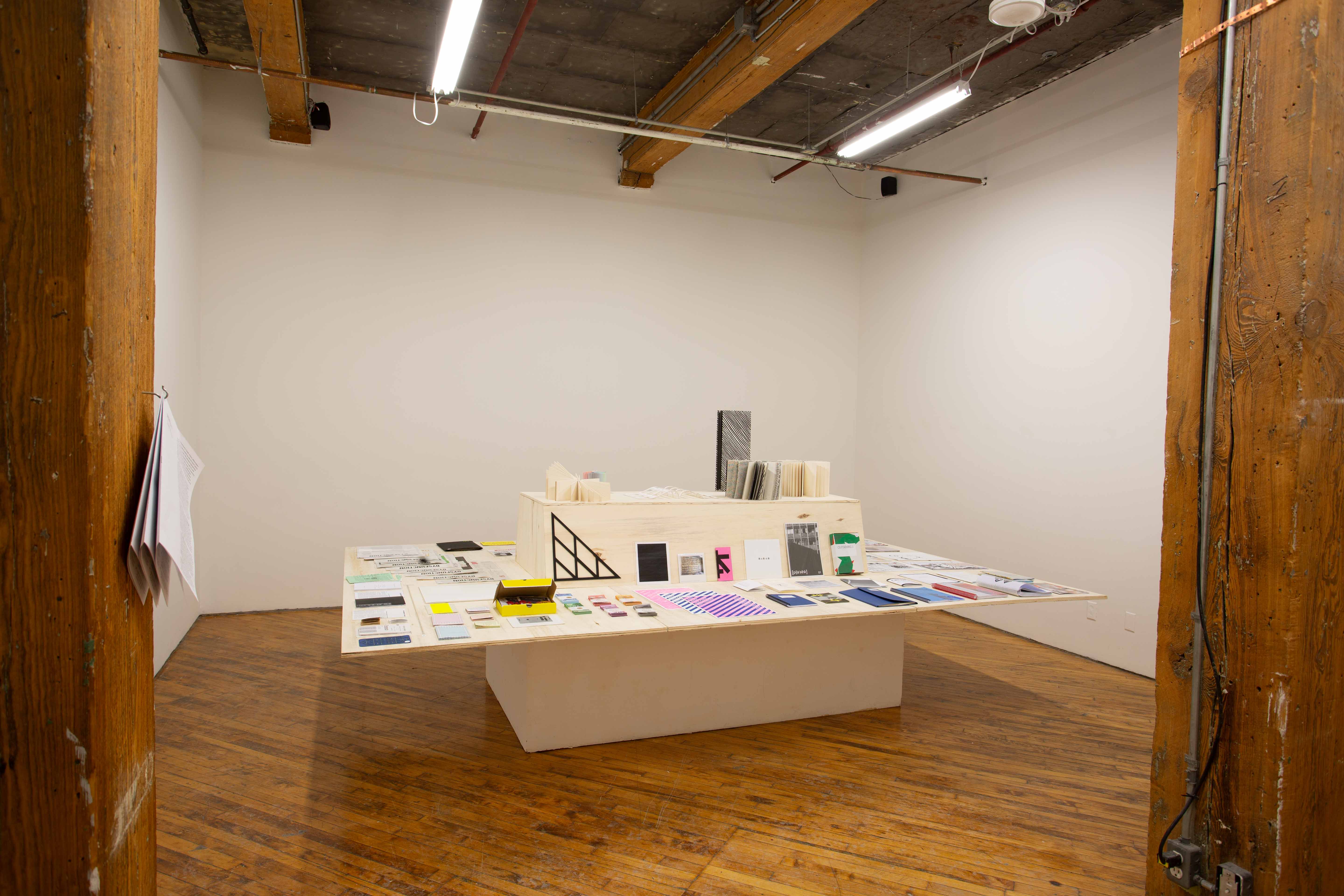
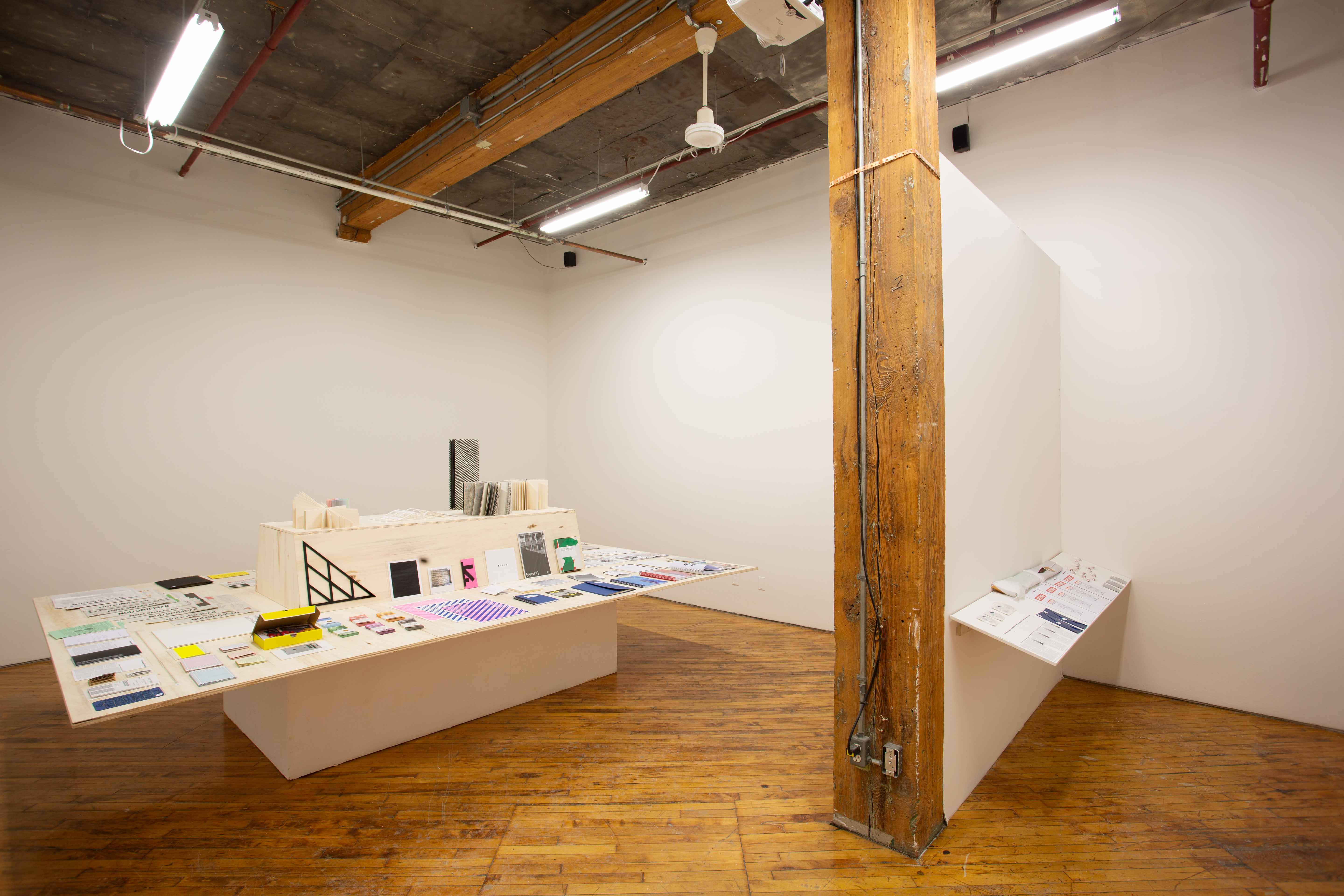
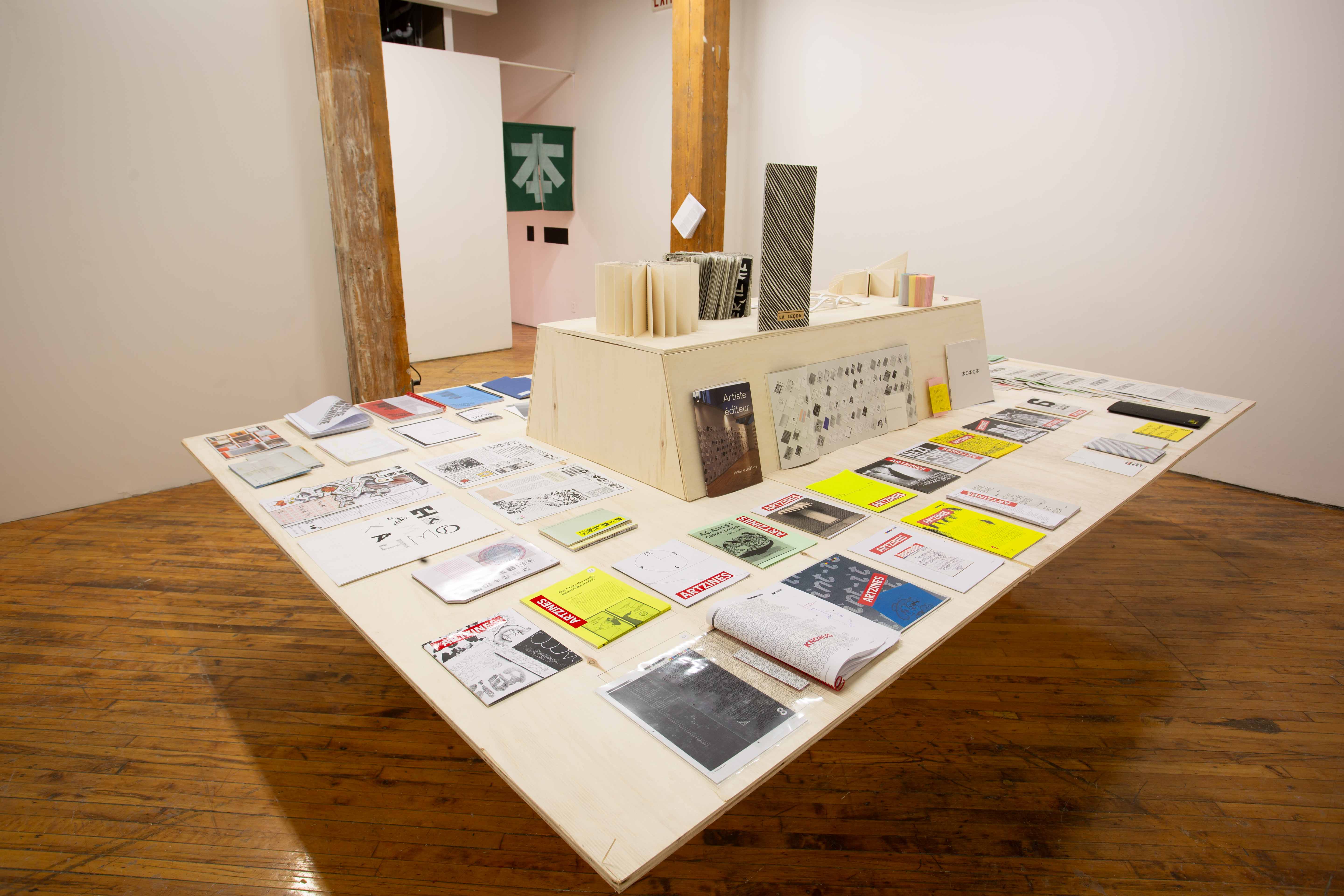
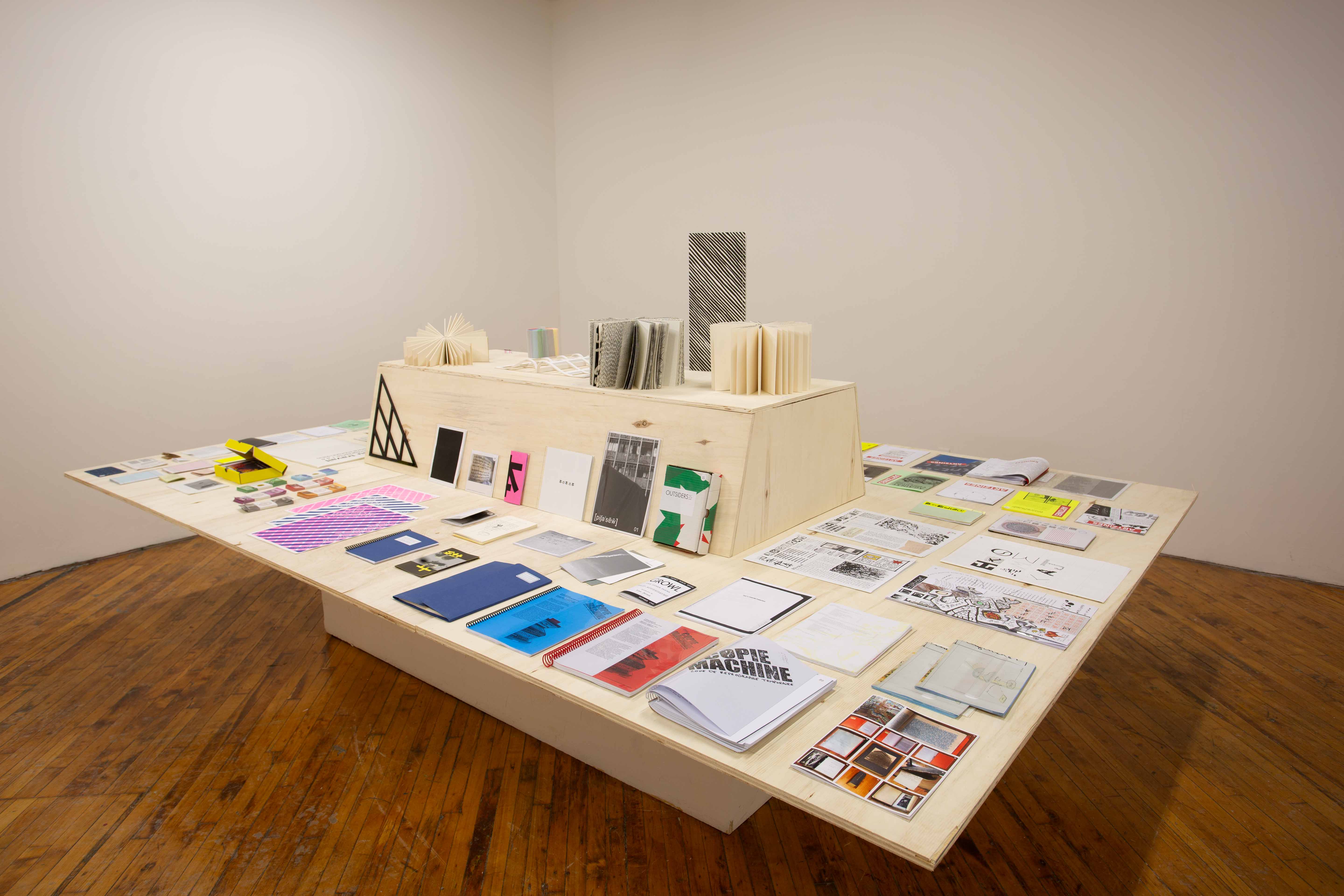
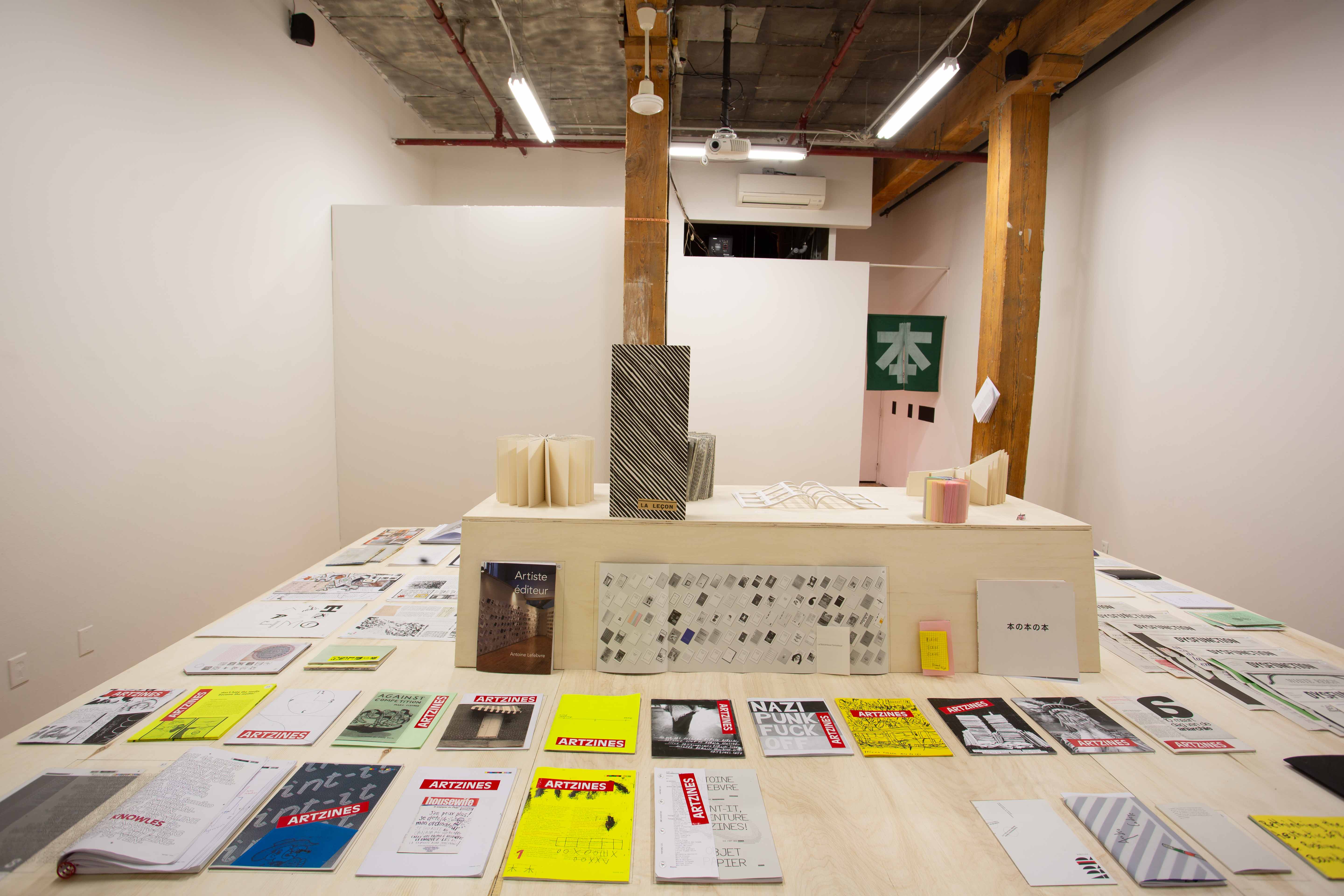
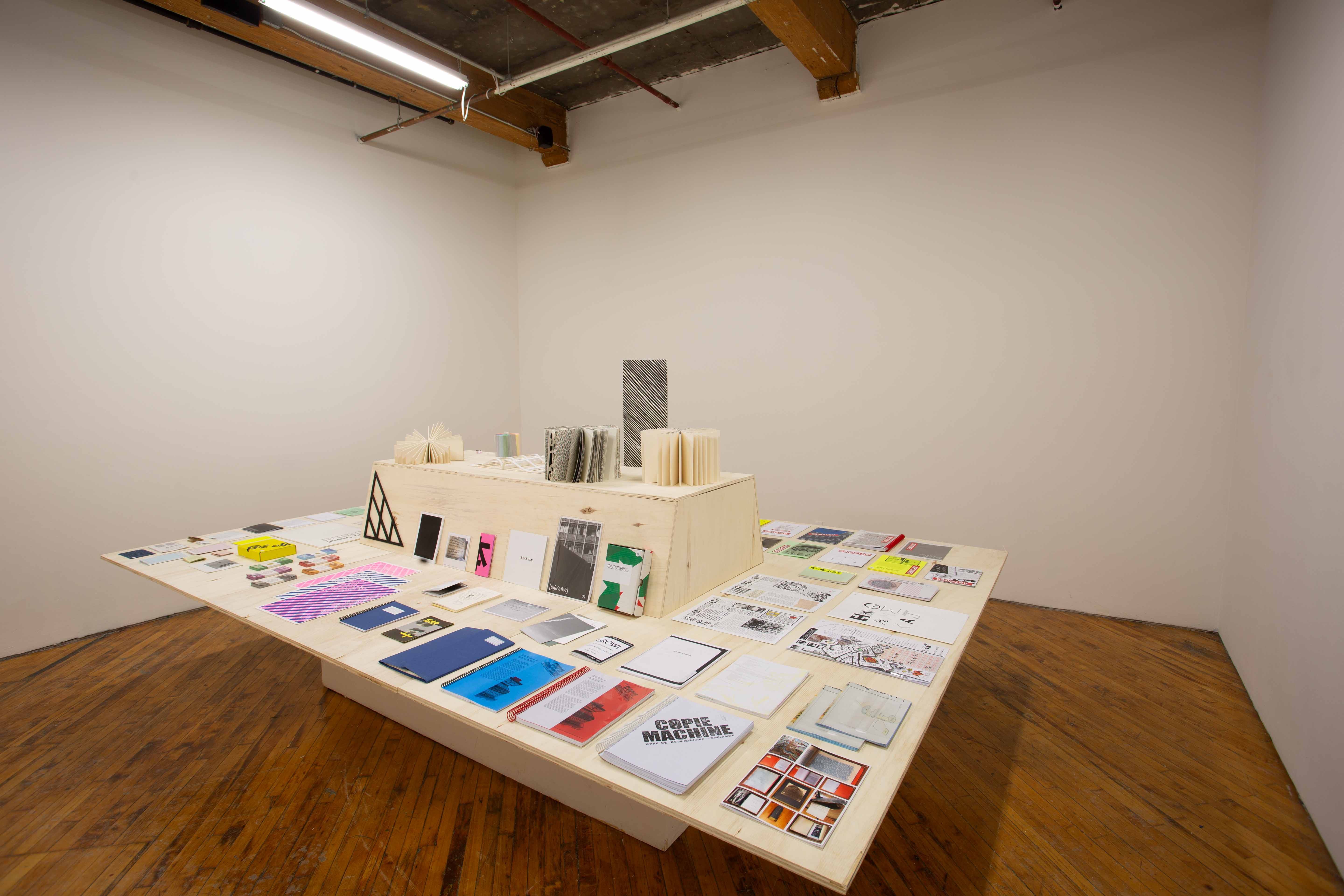
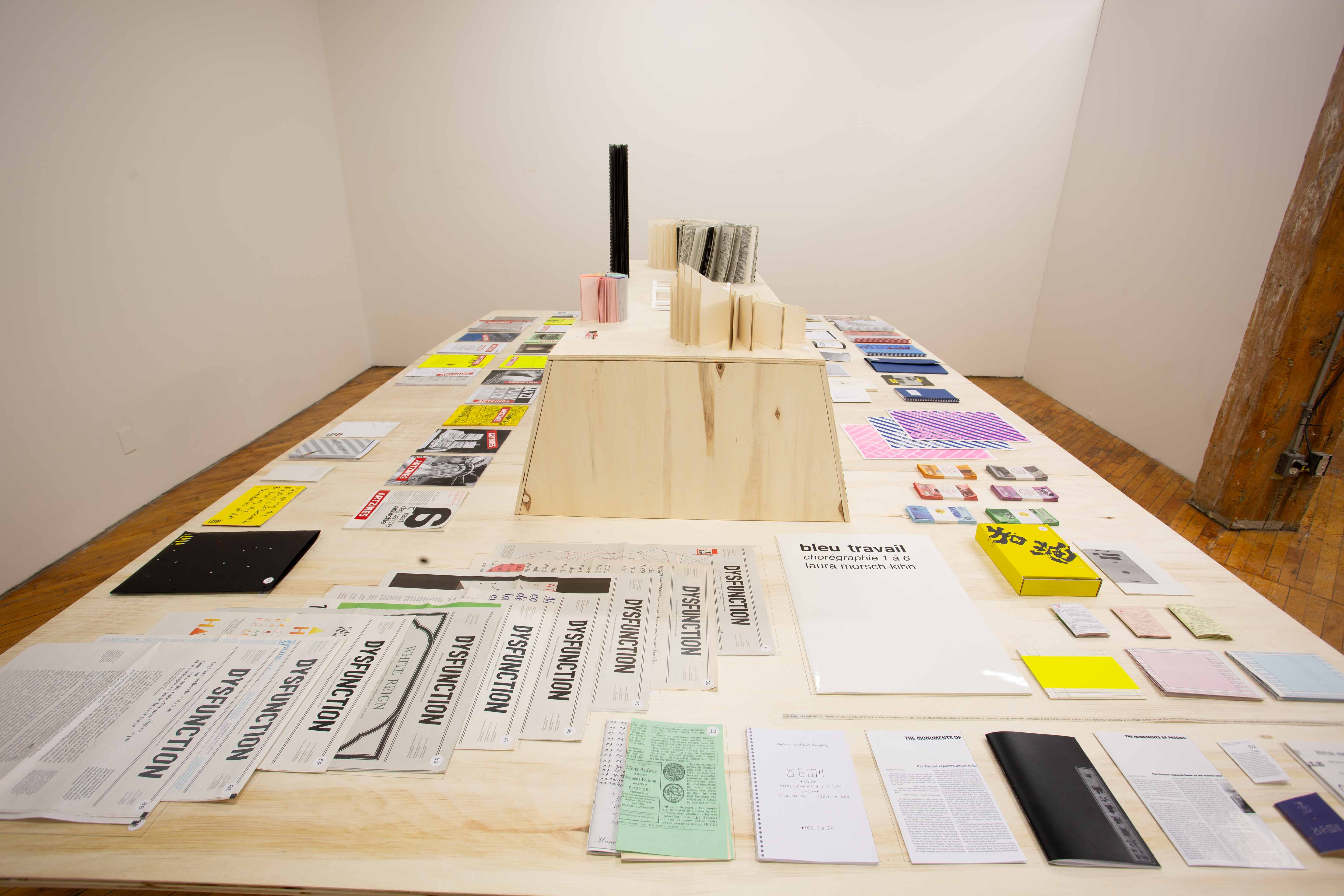
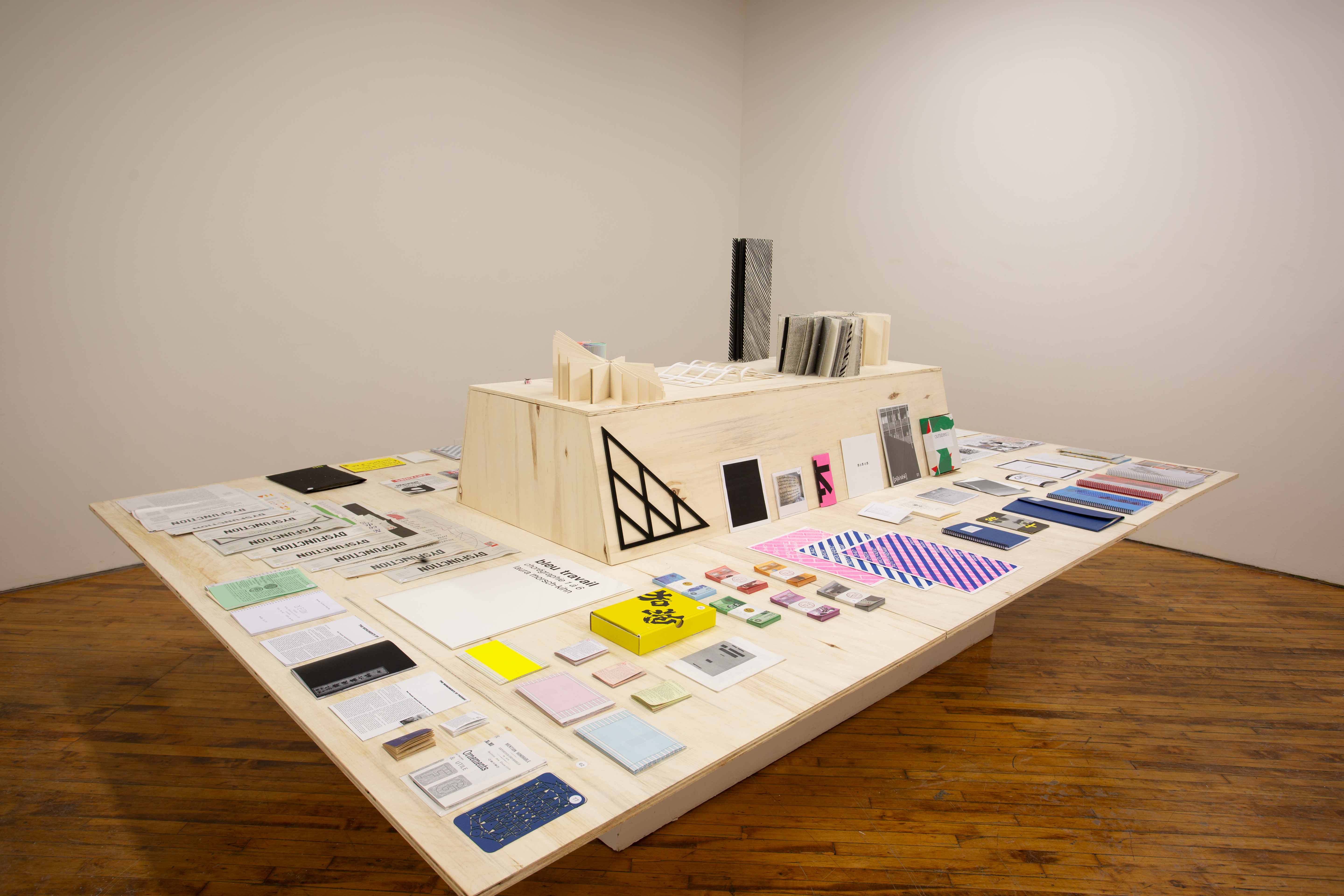
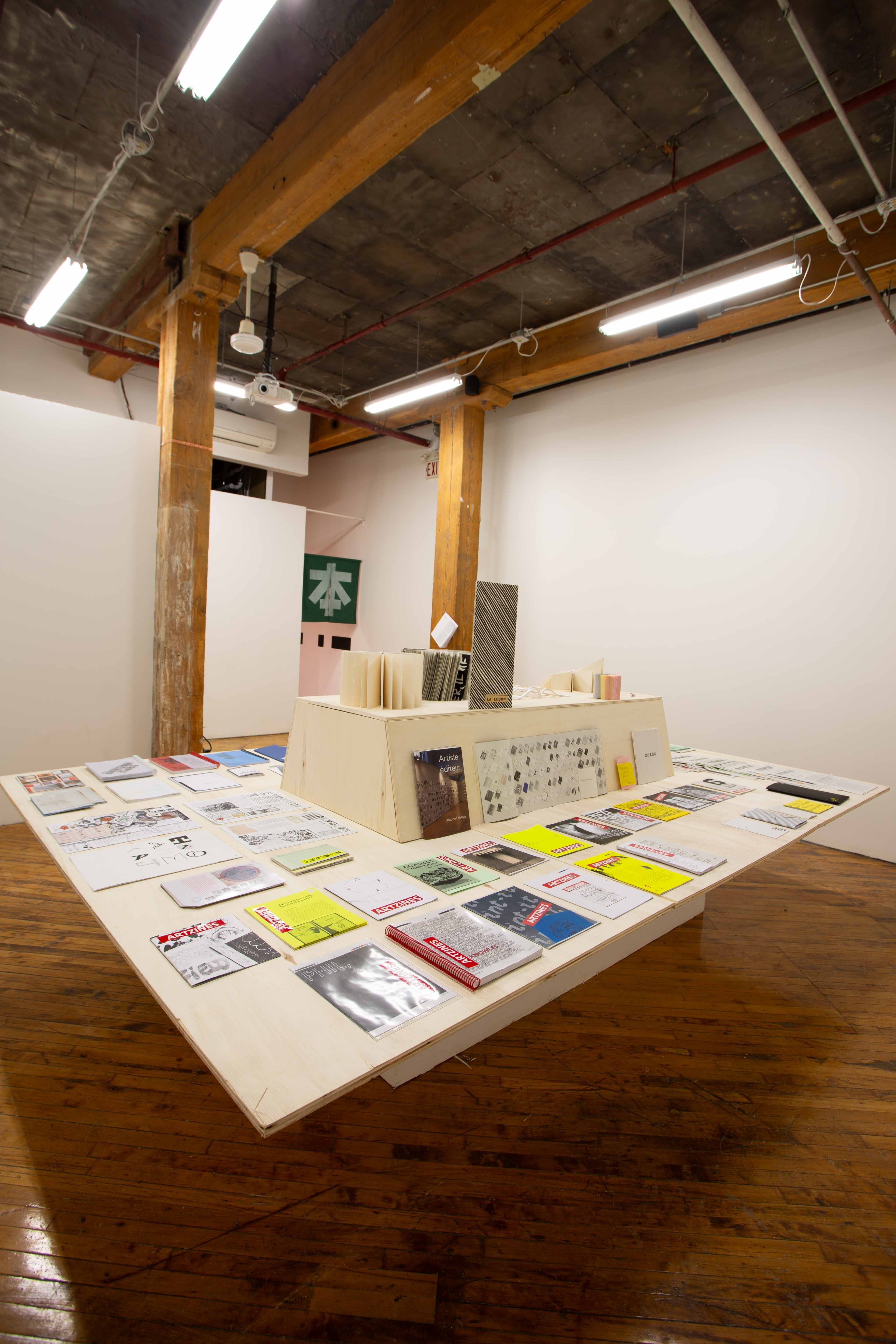
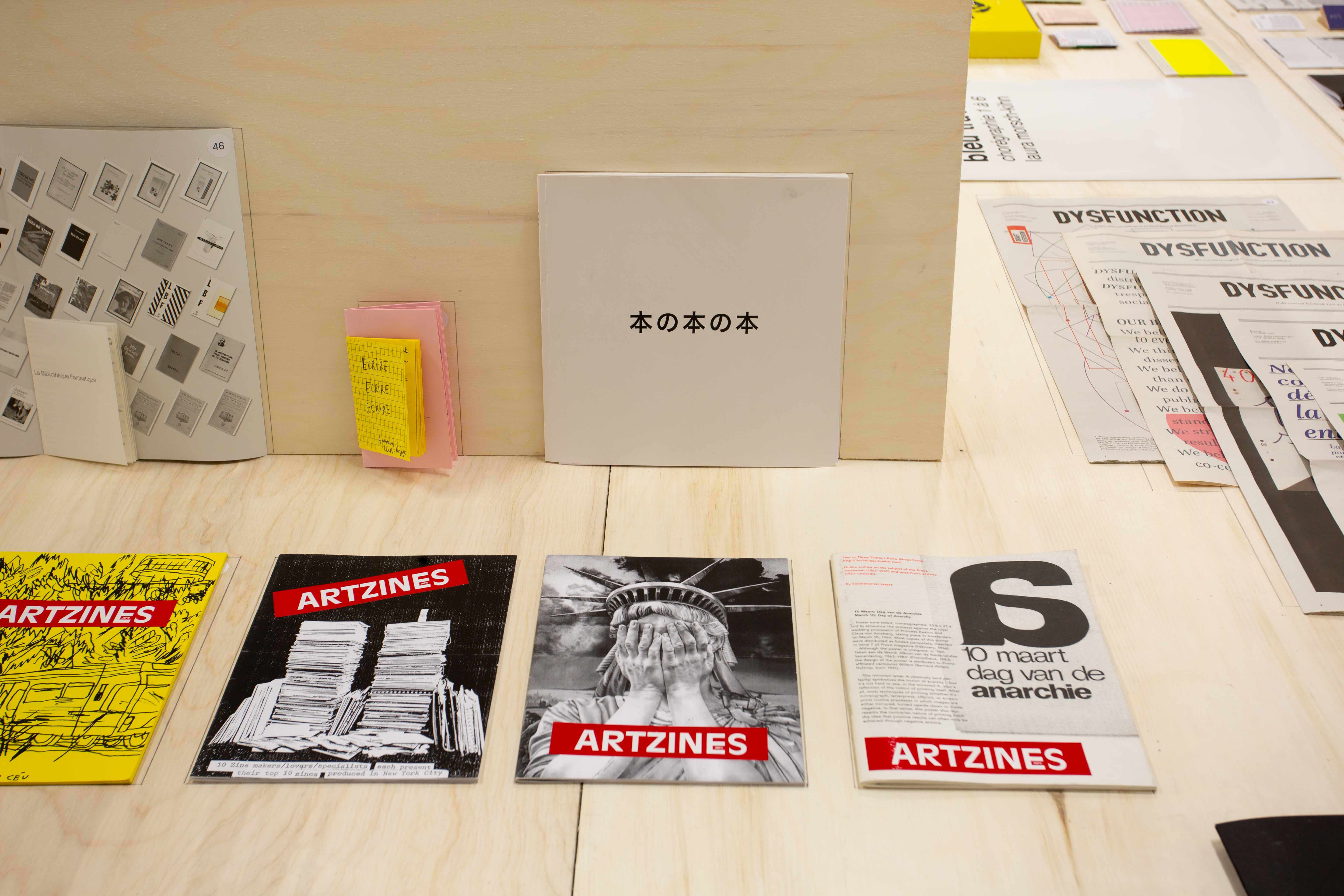
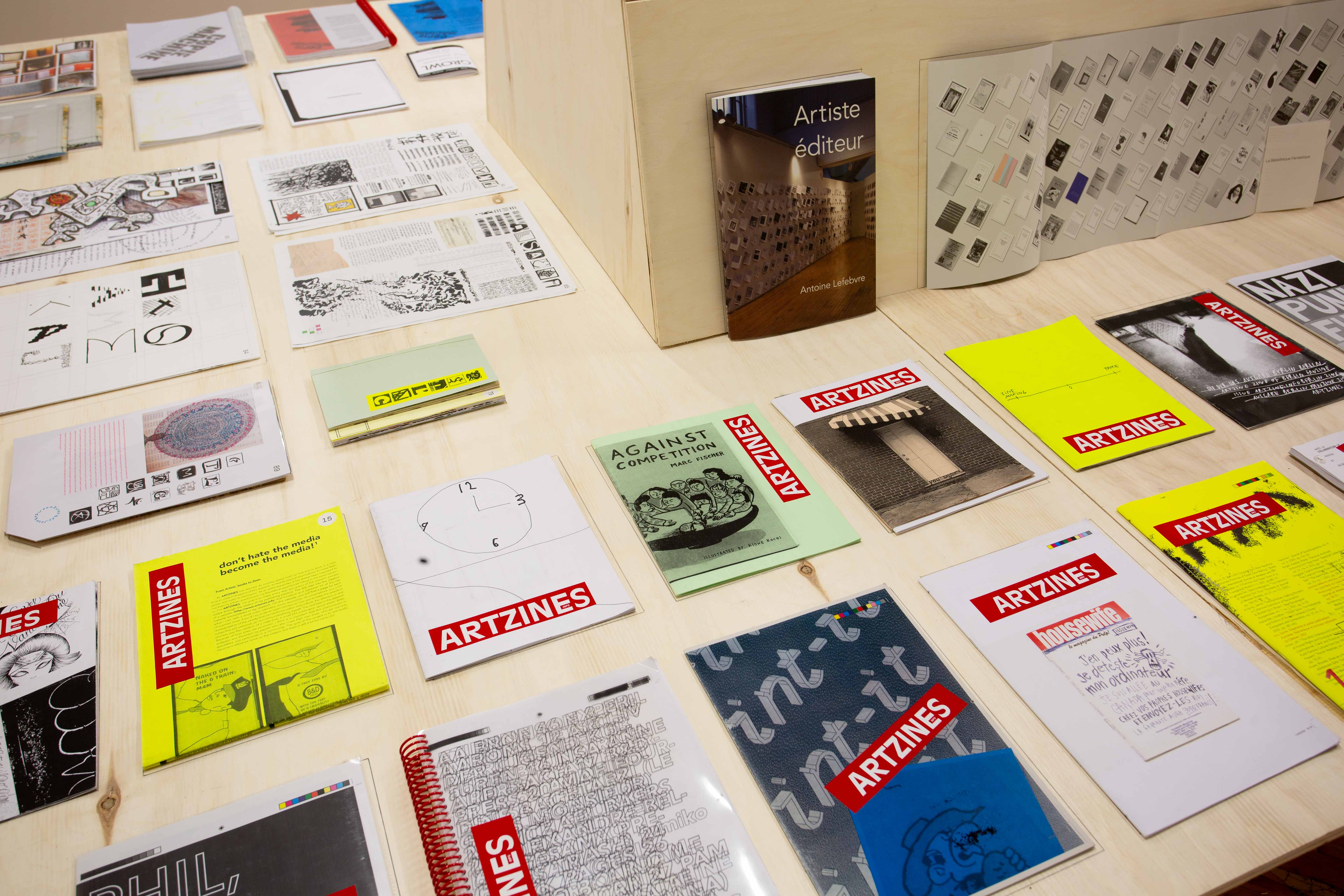
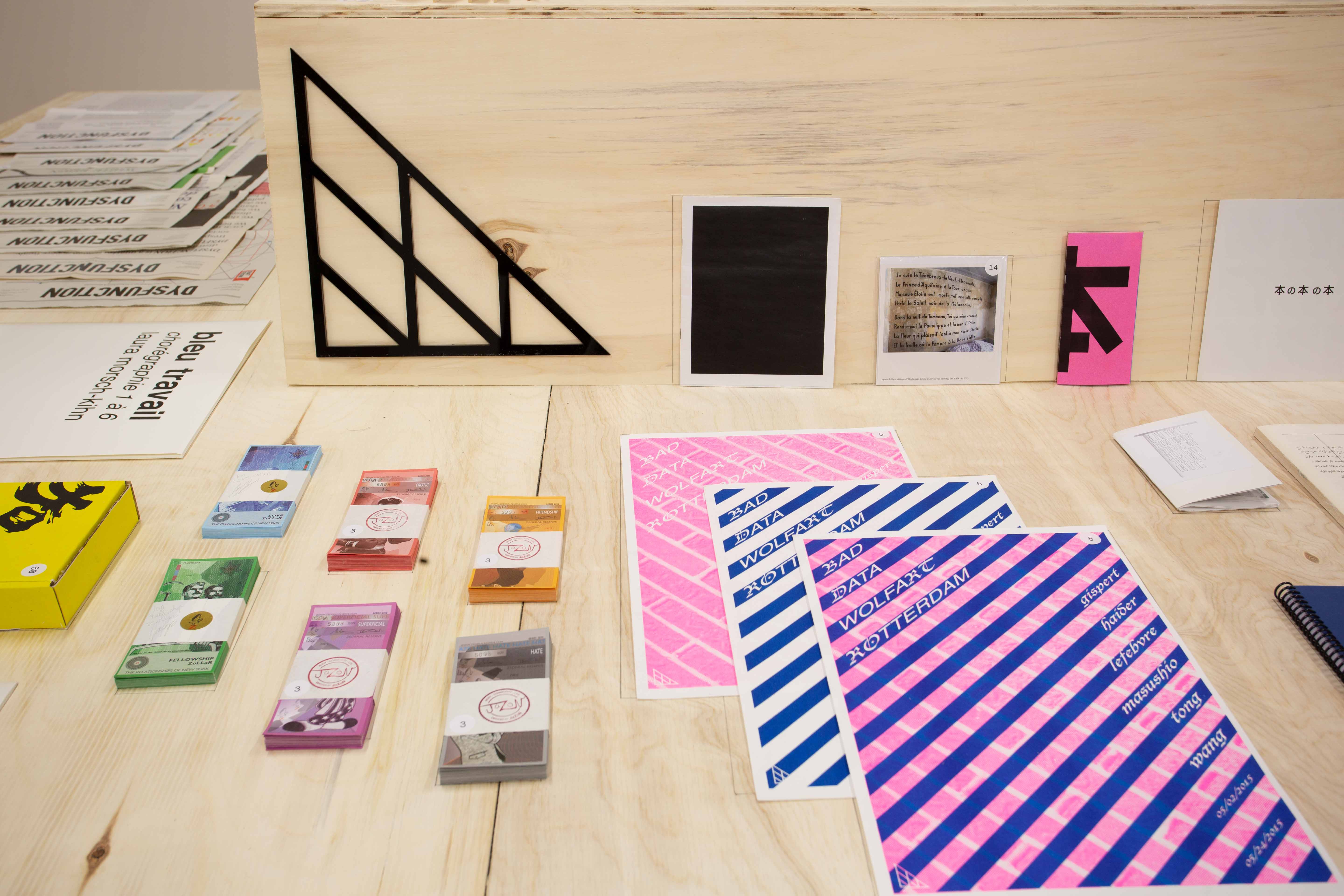
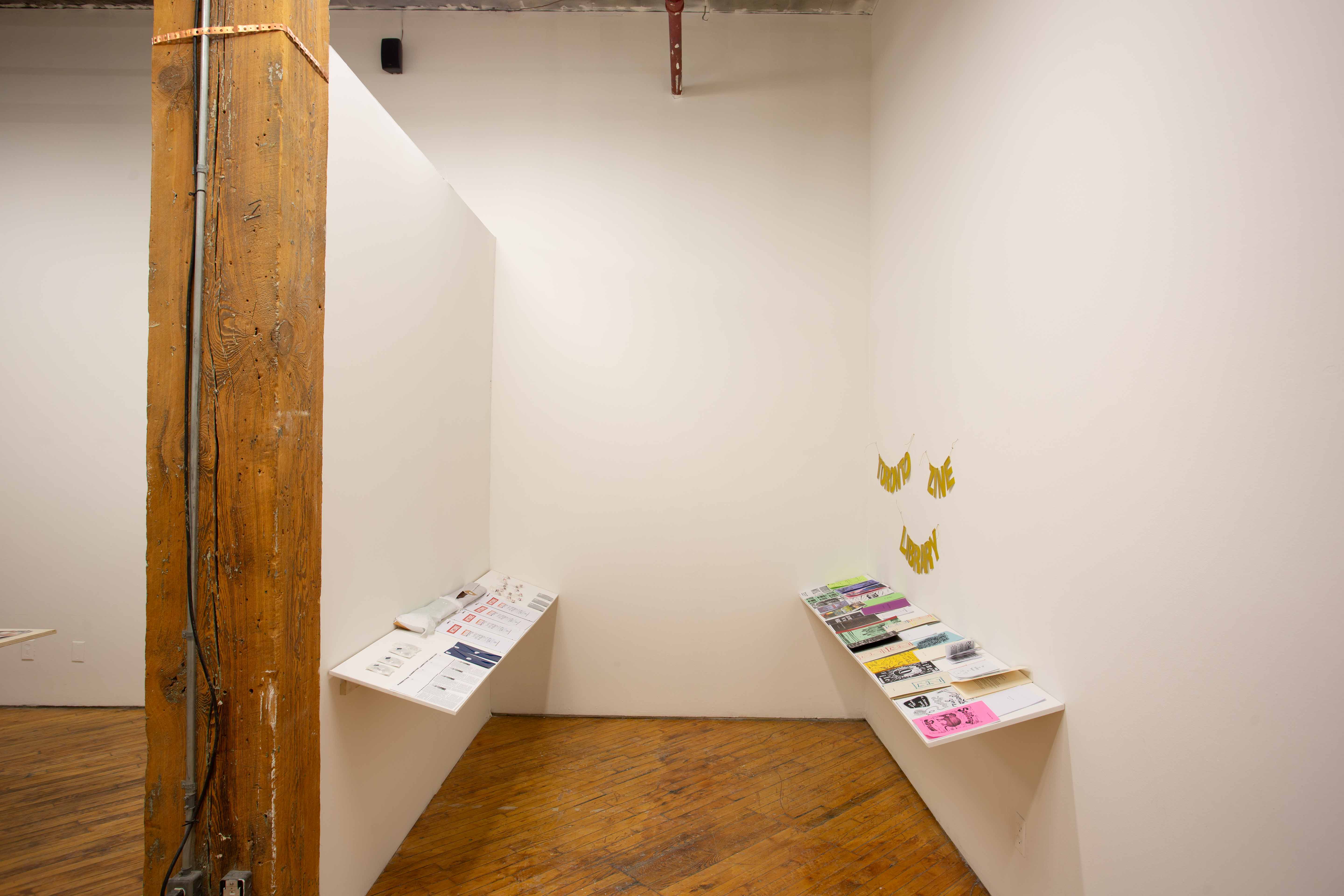
For his first show in Canada, Antoine Lefebvre takes a look back at a decade of publishing under the imprint antoine lefebvre editions. The nearly 100 publications featured draw a map of his interests and obsessions but mostly of a wide network of collaborations with artists, writers and researchers. Unlike his previous publishing project, La Bibliothèque Fantastique, a series of mostly black and white half-letter pamphlets, the publications made under the name antoine lefebvre editions offer a wide variety of shapes, formats, print runs, and topics.
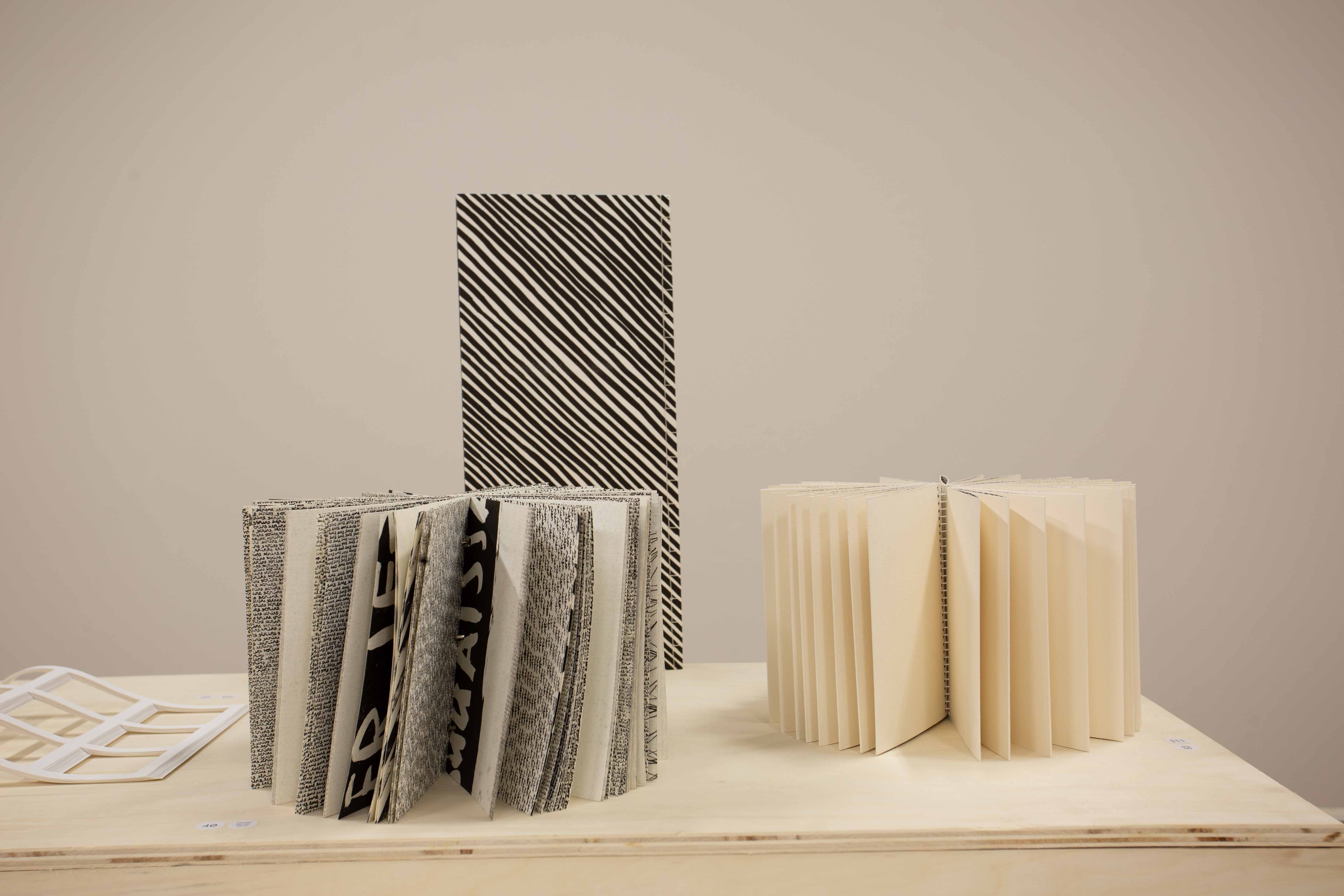
What these publications all have in common is to question what we usually expect from a book. This inquiry unfolds through collaborations with other artists, like bookworm, created with Farah Khelil, which explores the relationship between book-eating and book-loving, or Copie Machine, an ode to copy shops he continues to develop with Laura Morsch-Kihn. This exploration of what a book can be also takes a more formal dimension with Lefebvre’s own sculptural books, which explore the physical limits of what Ulises Carrion called “a sequence of spaces.” Other projects emerge from collective processes, like the publications made collectively by the participants of the asemic workshops. During these workshops, Lefebvre introduces a group to publishing as an artistic practice through meaningless writing. The publications resulting from this week-long experimentation have an eerie presence, as if they were artifacts from a long-forgotten civilization.
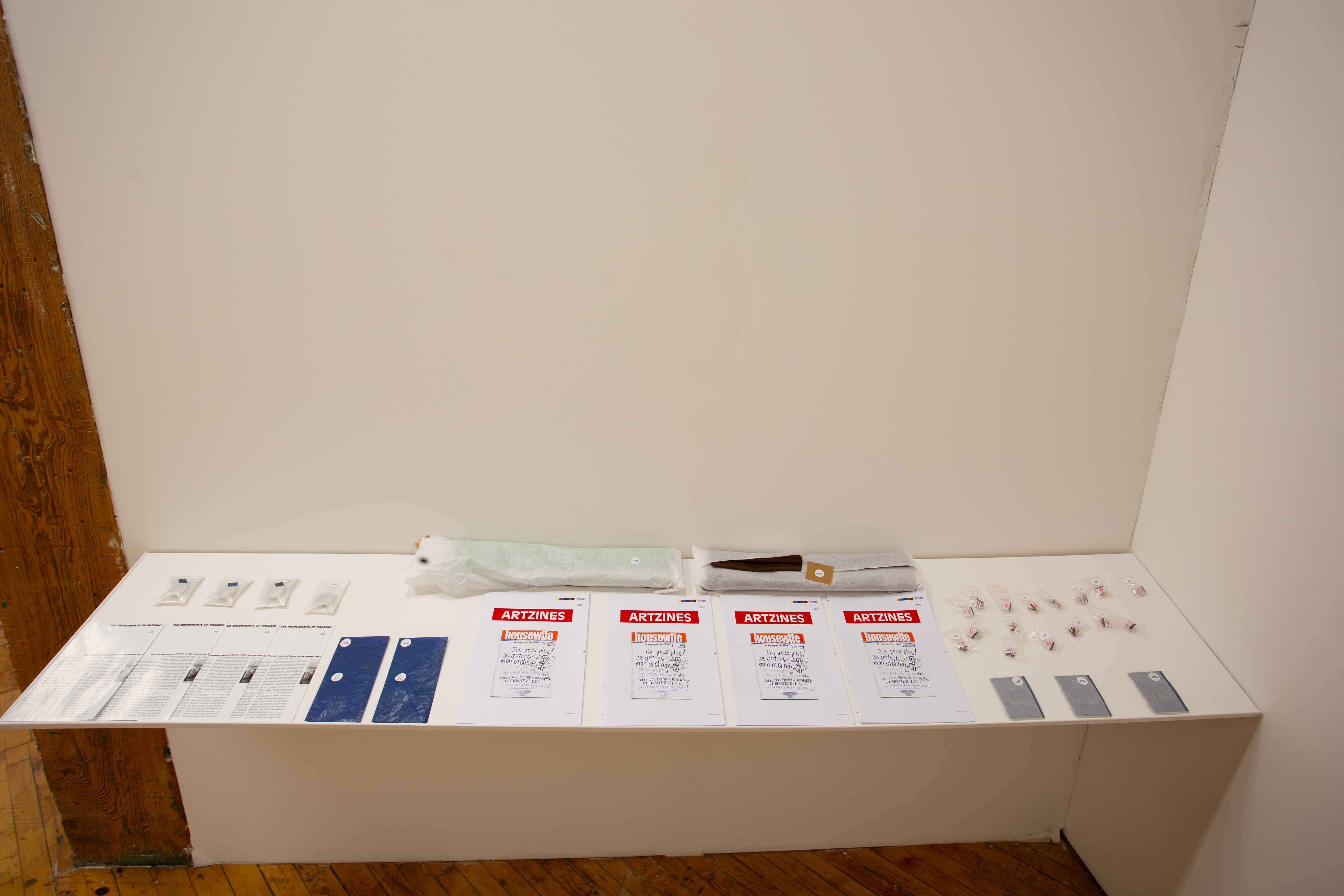
Publishing experimental forms of research is a key aspect of Lefebvre’s production. He created ARTZINES, a transmedia open access research project about zines made by artists. He started by traveling to look for artists who make zines and shared his discoveries through an online database and a metazine. After a decade of research upheavals, he had amassed an enormous quantity of data and was looking for a way to turn it into a book that would be as captivating as a mystery novel, both in content and form. He worked with the collective Objet Papier to publish in 2025 a one-of-a-kind reading experience, a “choose your own adventure” research publication that embarks the reader on a tailored experience unique for each reader.
Lefebvre also co-created and designed the academic newspaper DYSFUNCTION, which publishes research outputs that take an artistic form in order to reach a wider audience and bypass academic paywalls. Access to creative culture is one of the main reasons for Lefebvre to publish. A strong advocate of free software culture, he offers most of his publications to be downloaded for free under the Free Art License. At the same time, he can also be a pirate, as he does not hesitate to publish bootlegs when he gets his hands on hard-to-find ephemera that he feels should be more widely known.
He lives and works in Paris, where he created 本 \hon\ books, a bookshop and archive whose name was inspired by secondhand Japanese bookshops. After two years showing the work of artist publishers every month, the bookshop has been specializing in the past years in vintage graphic design and typography rarities.
++++
La centaine de publications exposées dressent une cartographie des intérêts et des obsessions de Lefebvre, mais surtout du vaste réseau de collaborations avec des artistes, des écrivain·es et des chercheur·euses. Contrairement à son précédent projet d’édition, La Bibliothèque Fantastique, composé d’une série de brochures principalement en noir et blanc toutes au format A5, les publications réalisées sous le nom d’antoine lefebvre editions offrent une grande variété d’impressions, de formats, de tirages et de sujets.
Cependant, ces publications ont toutes en commun de remettre en question ce que nous attendons habituellement d’un livre. Cette réflexion se décline à travers des collaborations avec d’autres artistes, comme dans le projet bookworm, avec Farah Khelil, qui explore la relation entre le fait d’aimer les livres et de les dévorer physiquement ou métaphoriquement, ou avec Copie Machine, une ode aux magasins de photocopie qu’il continue de développer avec Laura Morsch-Kihn. Cette exploration de ce que le livre peut être prend aussi une dimension plus formelle avec ses livres sculpturaux, qui explorent les limites physiques de ce qu’Ulises Carrion appelait « une succession d’espaces ». D’autres projets émergent de processus collectifs, comme les publications réalisées collectivement par les participant·es aux workshops autour de l’écriture asémique. Lors de ces workshops, Lefebvre initie un groupe à l’édition comme pratique artistique en explorant des formes d’écriture dénuées de sens. Les publications issues de cette semaine d’expérimentation ont une présence étrange, comme s’il s’agissait d’artefacts d’une civilisation oubliée depuis longtemps.
La production de publications expérimentales de recherche est un aspect essentiel de la production de Lefebvre. Dans le projet de recherche transmédia et libre ARTZINES il documente les zines créés par des artistes.
Après avoir partagé ses découvertes via une base de données en ligne et un métazine, Lefebvre avait accumulé une énorme quantité de données et cherchait un moyen d’en faire un livre aussi passionnant qu’un roman policier, tant par son contenu que par sa forme. Il a travaillé avec le collectif Objet Papier pour créer une expérience de lecture unique, une publication de recherche où vous le suivrez dans ses aventures, à la manière d’un « livre dont vous êtes le héros ». Vos choix, aidés par un algorithme génératif, construiront une expérience sur mesure, un livre unique et différent à chaque
fois.
Lefebvre a également co-créé et conçu le journal académique DYSFUNCTION, qui publie des résultats de recherche qui prennent des formes artistiques afin de toucher un public plus large et de contourner les plateformes de diffusion payantes des articles scientifiques. L’accès libre à la culture créative est l’un des principaux moteurs qui poussent Lefebvre à éditer. Fervent défenseur de la culture du logiciel libre, il propose la plupart de ses publications en téléchargement gratuit sous licence Art Libre. En même temps, il peut aussi être un pirate, et n’hésite pas à publier des rééditions non-autorisées lorsqu’il met la main sur des documents ou éphémèras difficiles d’accès qui, selon lui, mériteraient d’être plus largement connus.
Il vit et travaille à Paris, où il a créé 本 \hon\ books, une librairie et archive dont le nom s’inspire des librairies japonaises d’occasion. Après avoir présenté chaque mois pendant deux ans le travail d’artistes éditeur·ices, la librairie s’est spécialisée ces dernières années dans les documents rares autour du design graphique et de la typographie.
Documentation: Allan Kosmajac
Documentation
Artist Bio
Antoine Lefebvre
Antoine Lefebvre is an artist publisher, a researcher and educator, and sometimes a curator and a bookseller. The printed book format is the one thing that binds all these different activities, preventing him from becoming totally crazy or just scattered. Because his first and last names are awfully common in France, he has chosen antoine lefebvre editions as an alias since 2015 as a way to show that his publishing activity is his main artwork. Through long-term, often collaborative projects, he takes the time to explore subjects and formats in-depth.
Lefebvre created La Bibliothèque Fantastique as part of a practice-based PhD in Fine Arts at the Sorbonne in Paris. This publishing project, which took its name from the eponymous text by Michel Foucault, supported his practice-based PhD with the title “Portrait of the Artist as a Publisher: Publishing as an Alternative Artistic Practice,” finished in 2014.
His work is mostly exhibited in book fairs across the globe, but also in exhibitions in Sidi Bou Saïd, New York, Paris, Dubai, and Amman, among other places